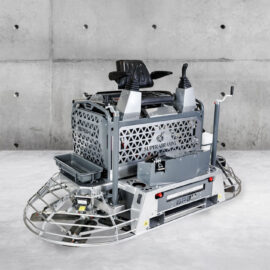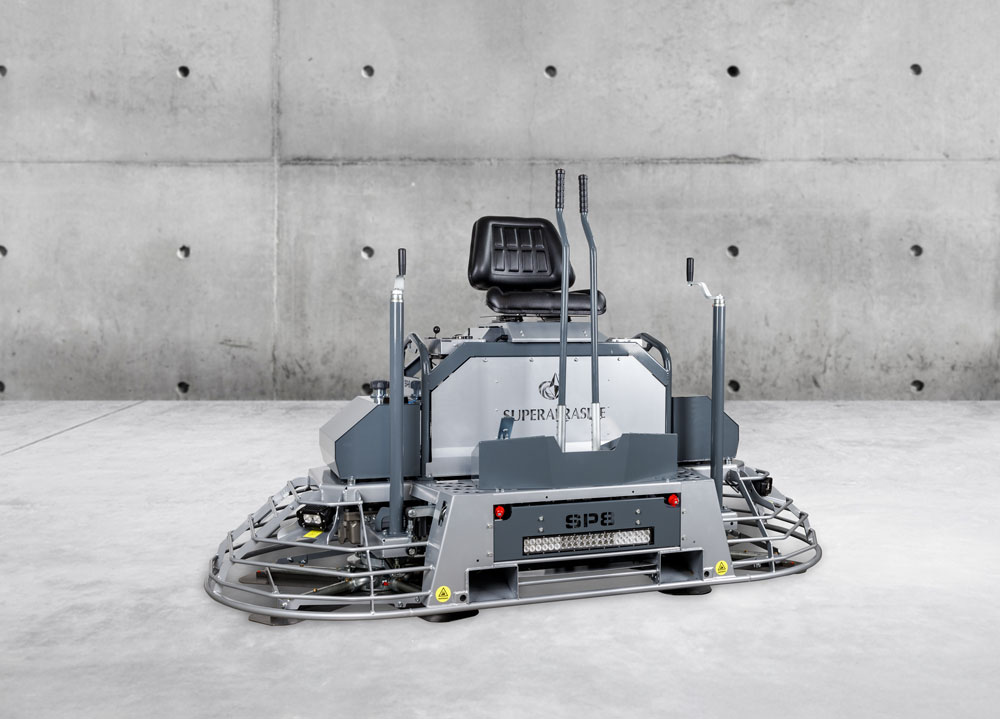

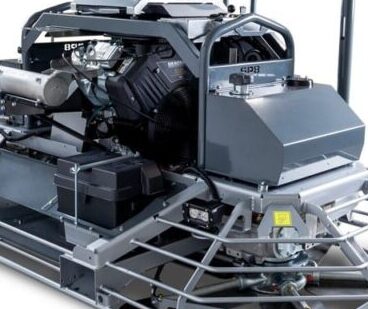
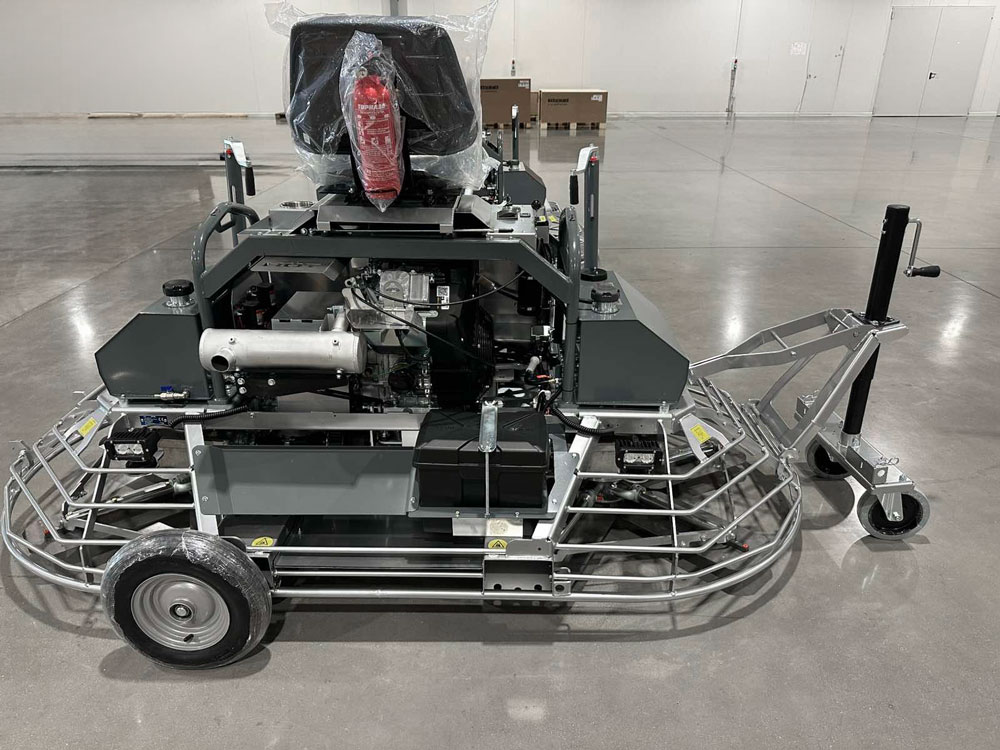
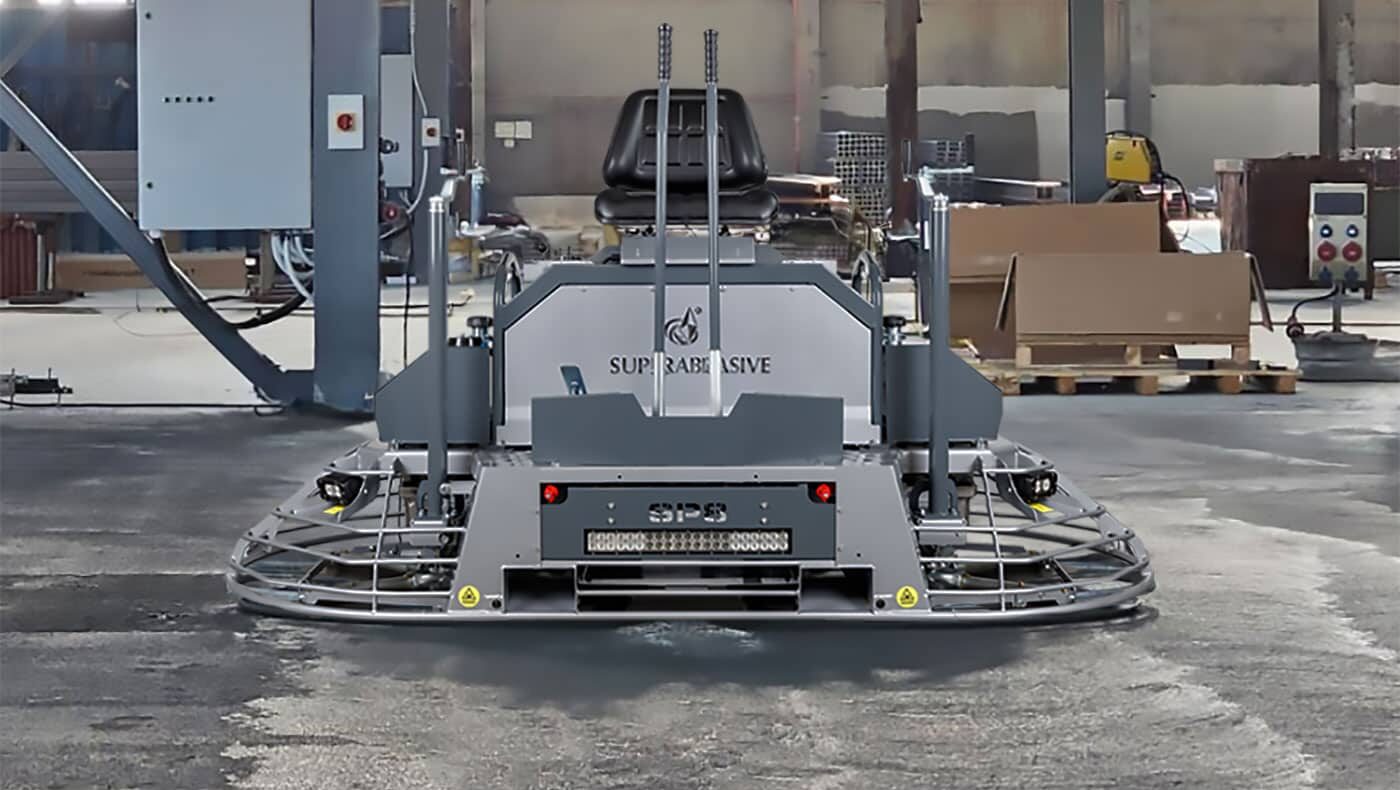
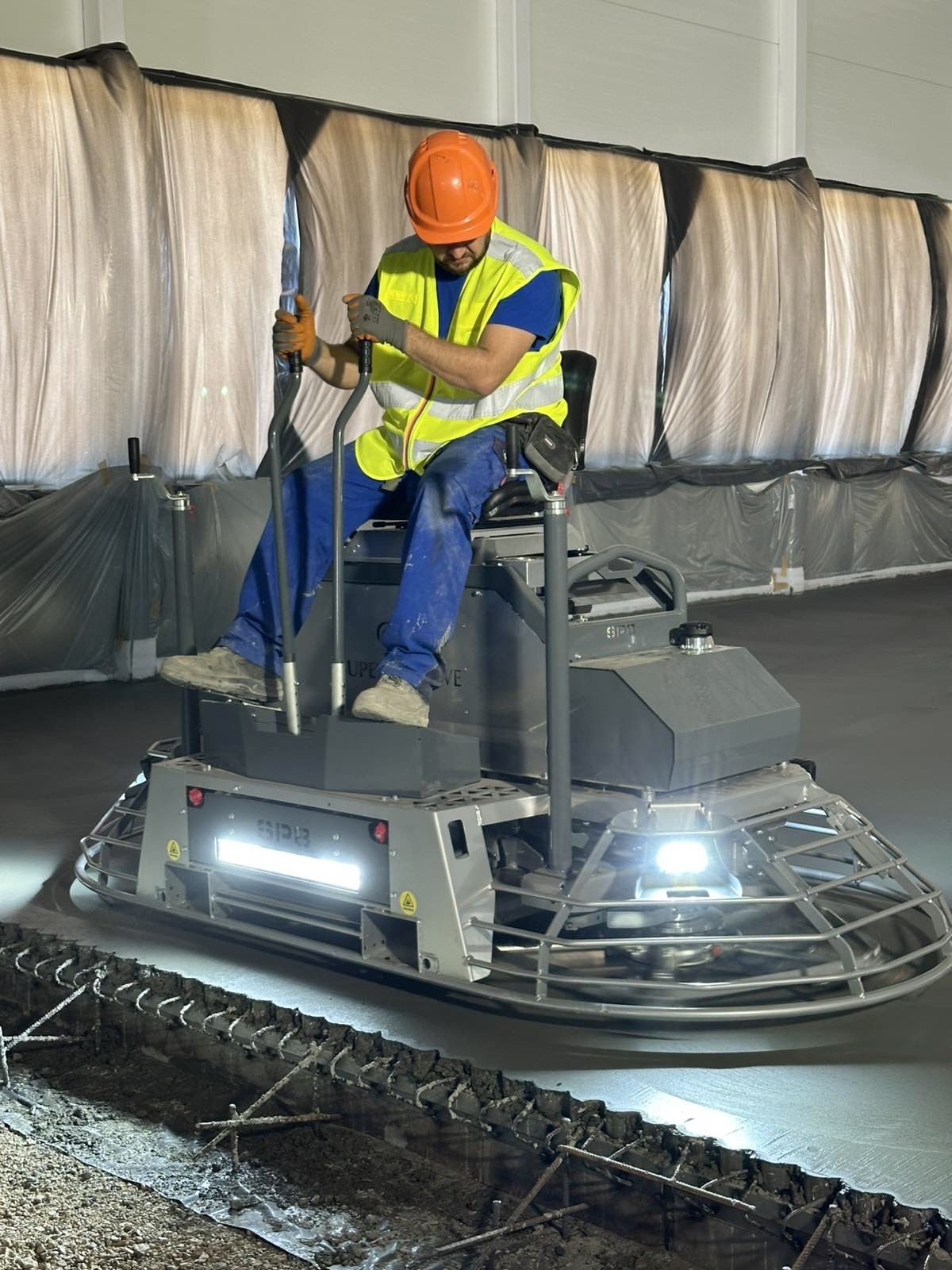
With its powerful performance and thoughtful design, the SP8 mechanical rider offers a superior solution for operators who need efficiency, durability and control on the jobsite.
TROWEL FEATURES:
- SEALED BEARING DRIVELINE
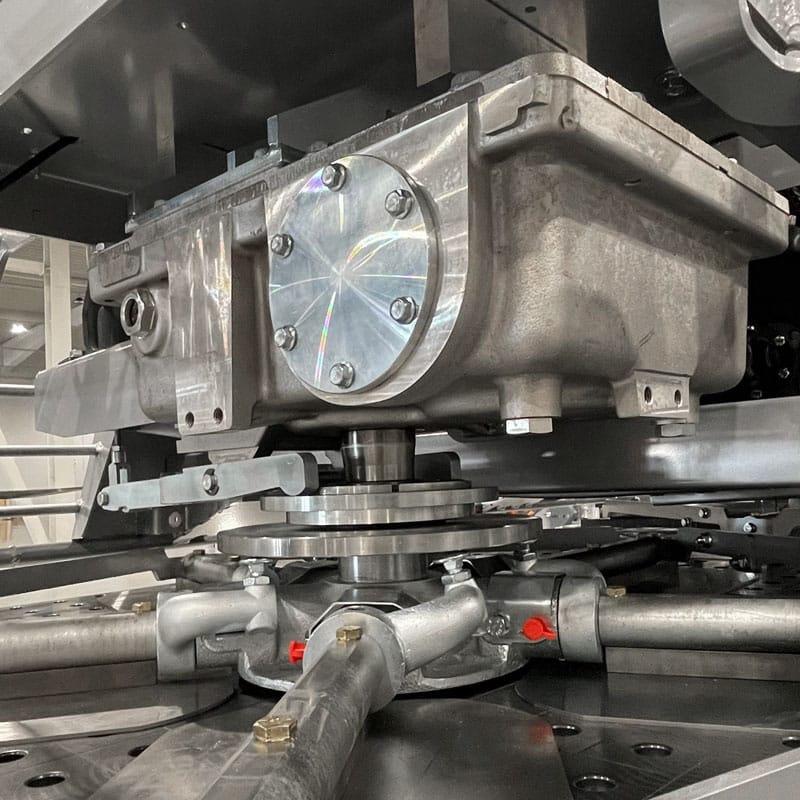
Our sealed bearing driveline eliminates daily greasing, significantly reduces maintenance, and delivers long-lasting durability.
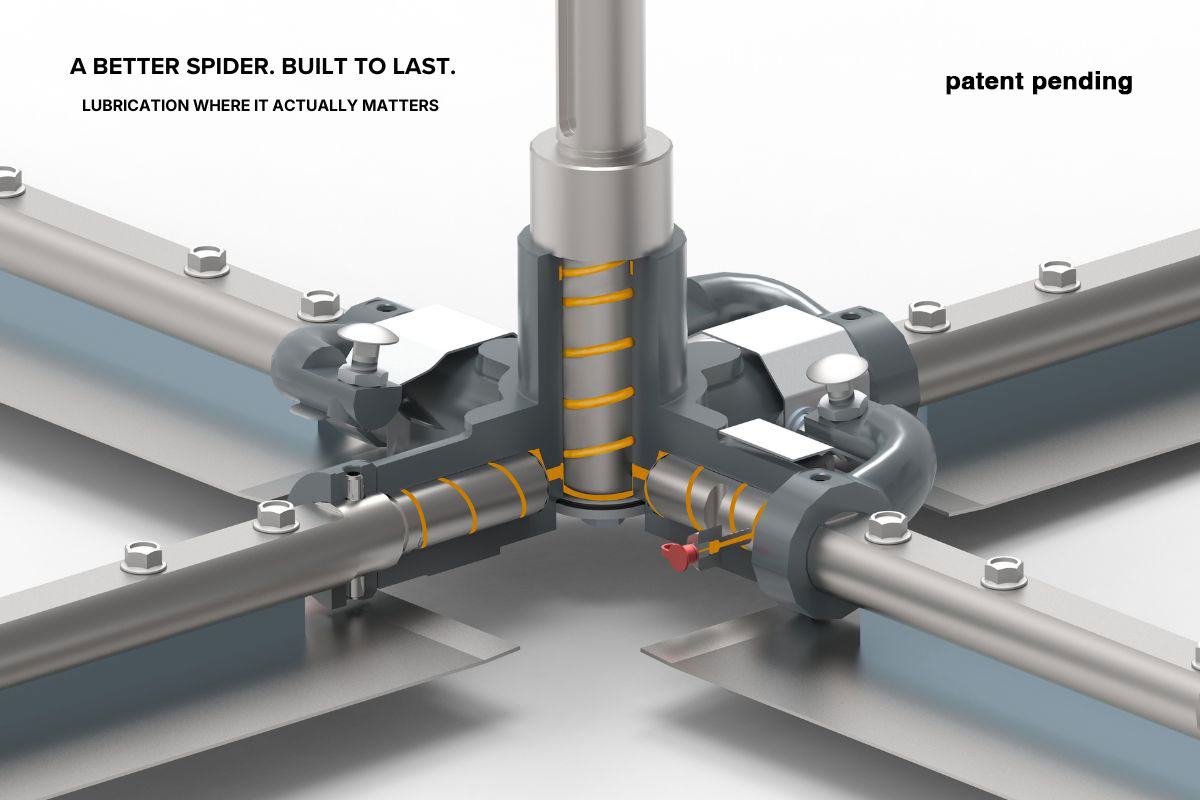
- PATENT-PENDING SPIDER DESIGN
Seized spiders mean costly repairs, damaged parts, and unnecessary downtime. That’s why we engineered a smarter solution. Our patent-pending spider-shaft lubrication system delivers grease directly to the critical shaft-to-spider interface – an area often overlooked in conventional trowel designs. It uses the same grease points you already service – just grease your trowel arms like you always do, and the spider gets protected too. This helps reduce corrosion and fretting, prevent spiders from seizing onto the shaft, make spider removal easier, extend shaft and spider life, cut downtime and repair costs.
- PROTECTION WHERE IT MATTERS
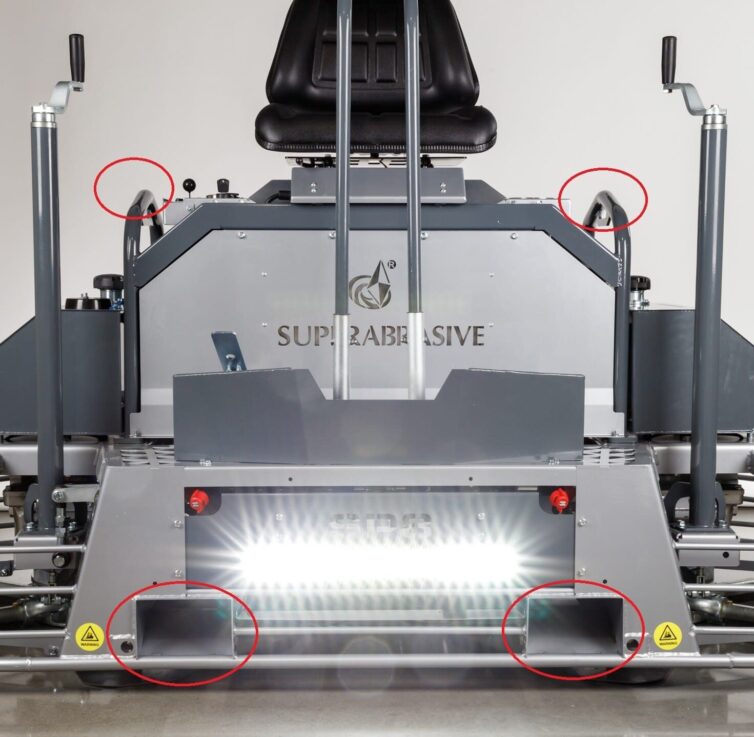
- Integrated forklift pockets provide safe, controlled lifting and efficient transport without straps.
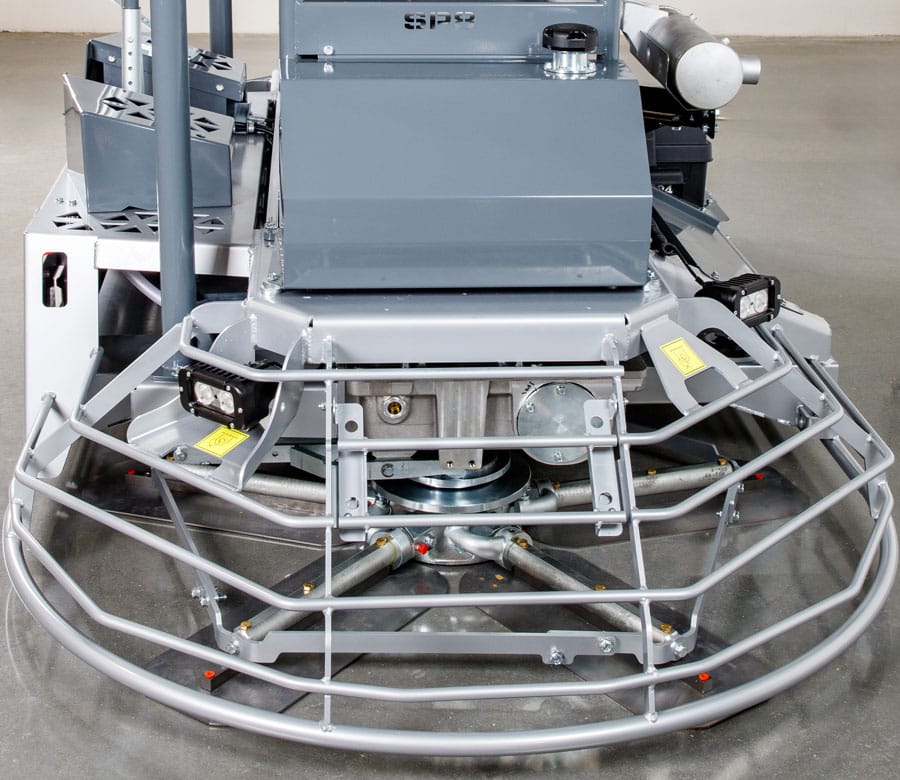
- Protective shield between lift pockets reduces concrete splashing and protects the CVT and driveline from debris and impact.
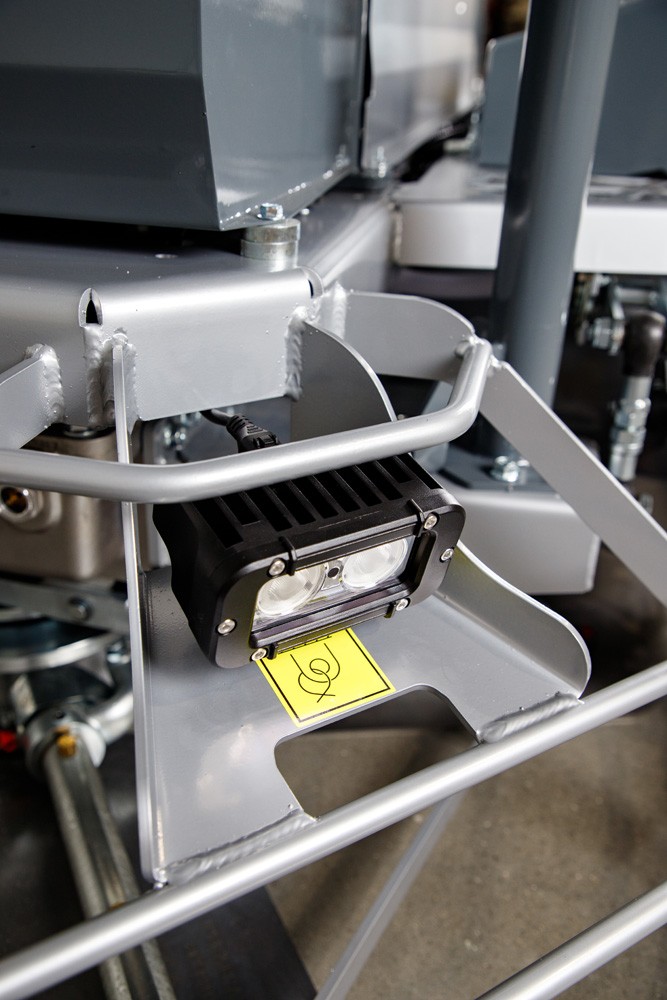
- Low-profile guard bar mounted above the front lights to help prevent damage from standing, strapping, transport, etc.
- SUPERIOR VISIBILITY
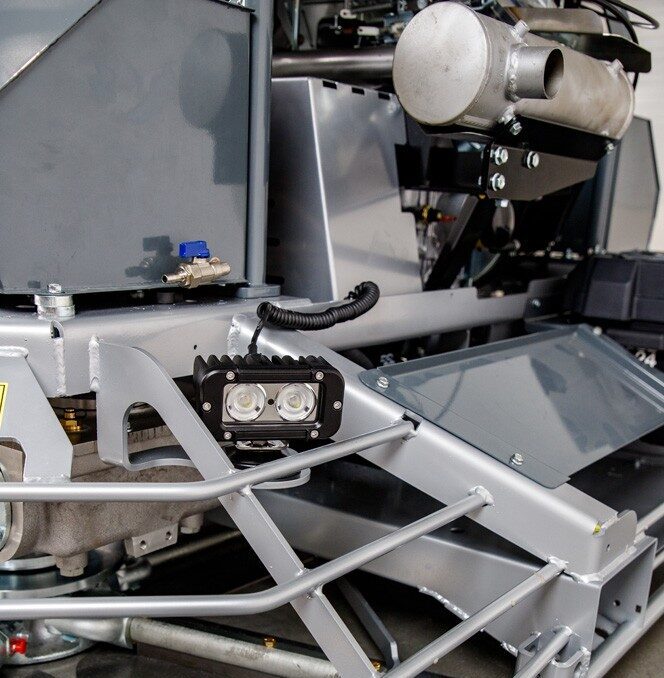
Front lighting includes a massive LED light bar plus four adjustable lights for excellent visibility during night and early-morning pours. Rear lighting system includes two rear work lights with magnetic attachment and telescopic cable, allowing flexible positioning while reducing breakage.
- IMPROVED FUEL SYSTEM
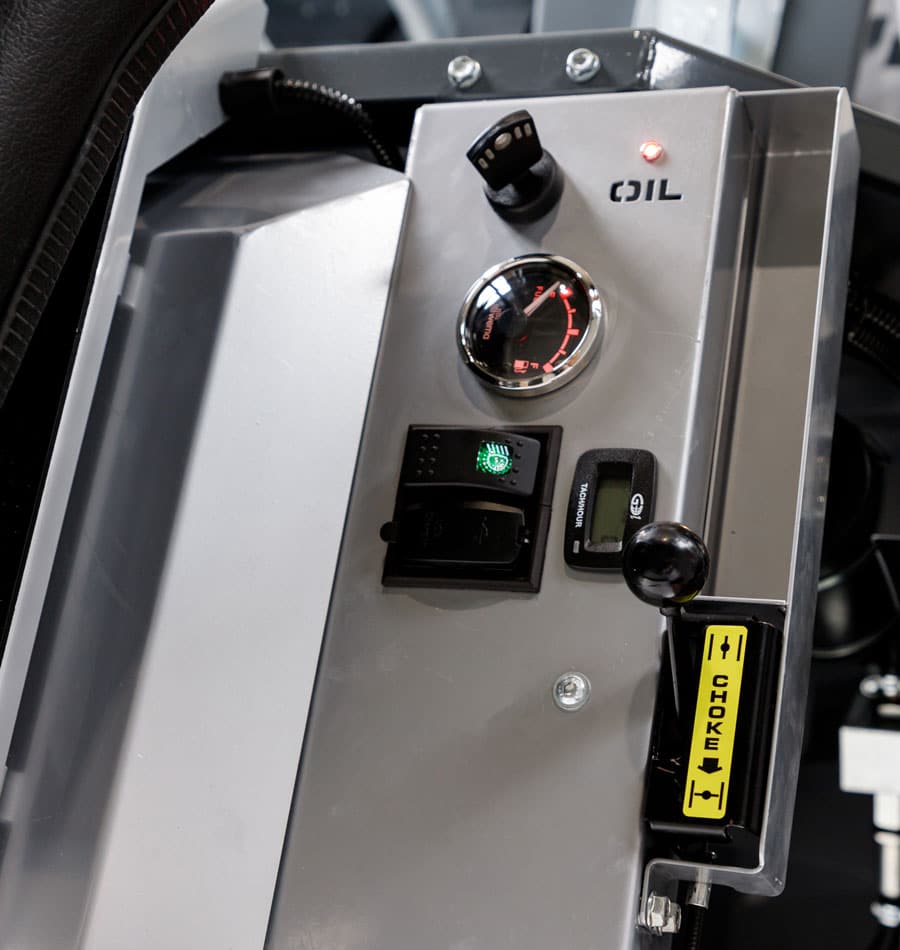
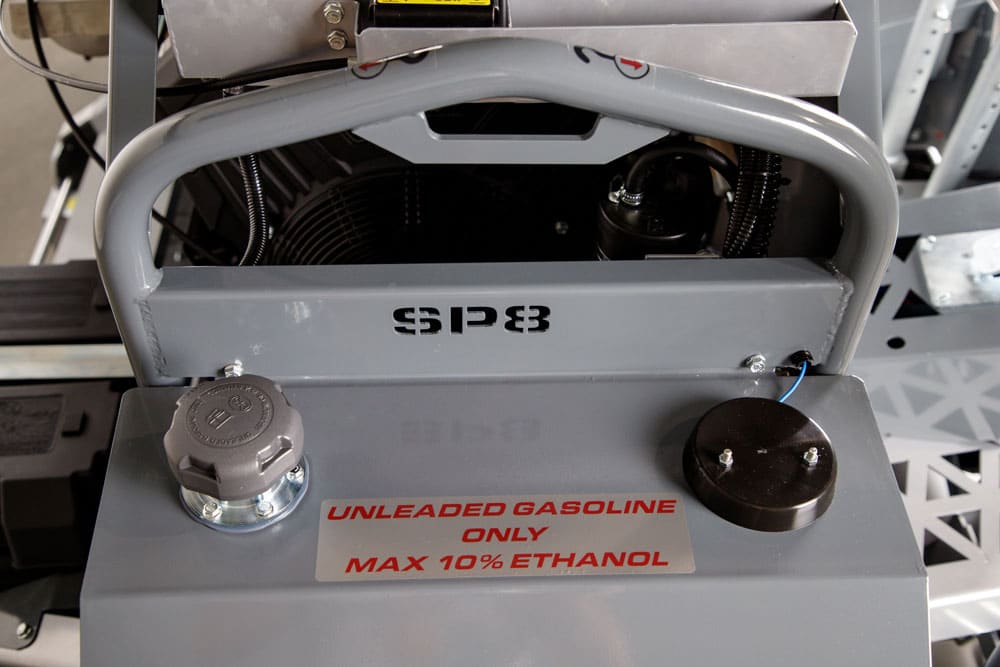
Sealed fuel cap, dash-mounted real fuel gauge, eliminates cap-mounted float failures, reduces water intrusion, and improves fuel-level accuracy.
- OPERATOR DASHBOARD
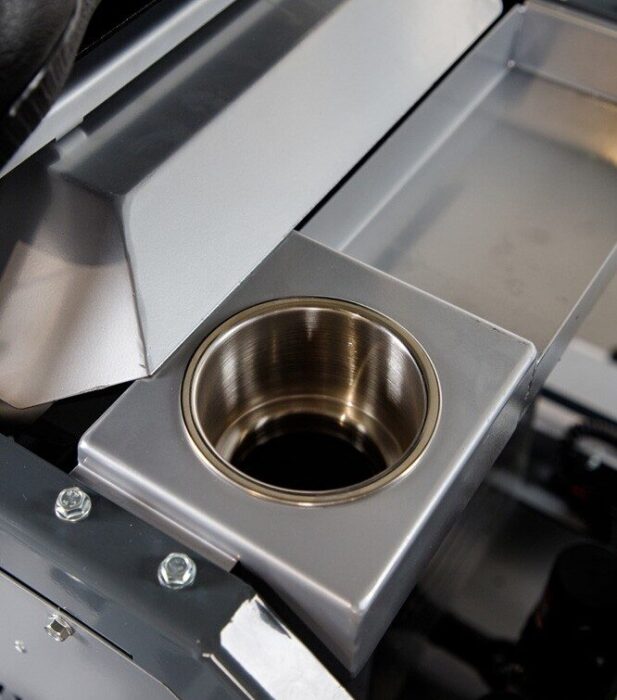
The clean and functional dashboard layout includes a fuel level gauge, USB charging port, phone holder, hour meter, and oil warning light.
- EASY BLADE ACCESS
Tool-free access door with magnetic closure allows fast, efficient blade changes and simplified maintenance.
- HELICAL GEARBOX BUILT IN-HOUSE
Precision-machined internals are built in-house for strength, efficiency, and long-term reliability.
- TRANSPORT ENHANCEMENTS
Side strapping points and reinforced gussets allow secure transport without damaging the seat or machine. Optional transport wheel kit – #A124.
- Other durability-focused trowel features include: Rubber-booted hem joints to reduce contamination and extend joint life; Protected spray tips to minimize breakage; Sectional stabilizer ring allowing damaged sections to be replaced individually.
See it in action: