
Superabrasive

Concrete Finishing Tools

Concrete Finishing Tools & Accessories

transport wheel dolly jack for walk-behind trowels
dolly jack for walk behind trowel

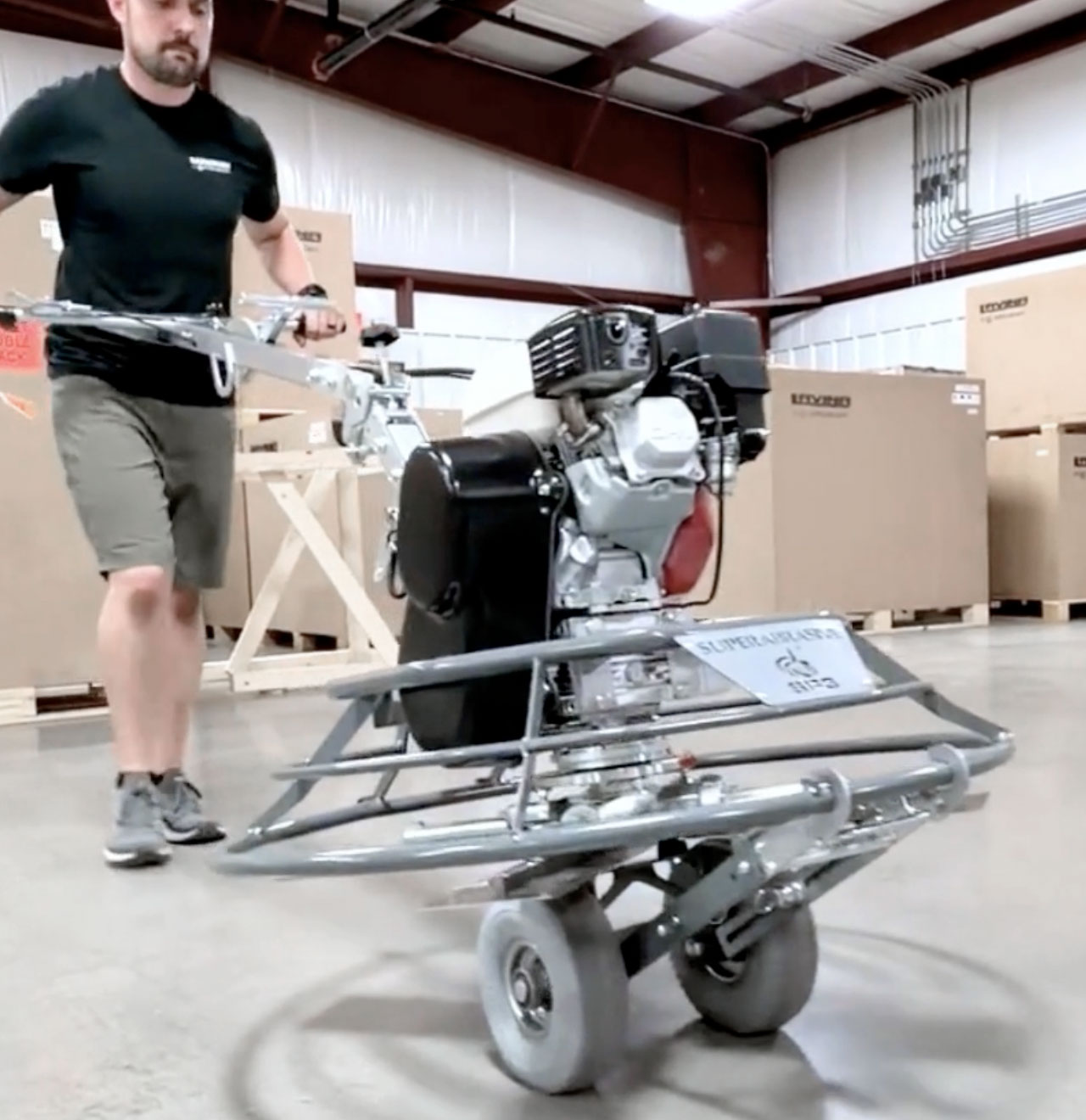
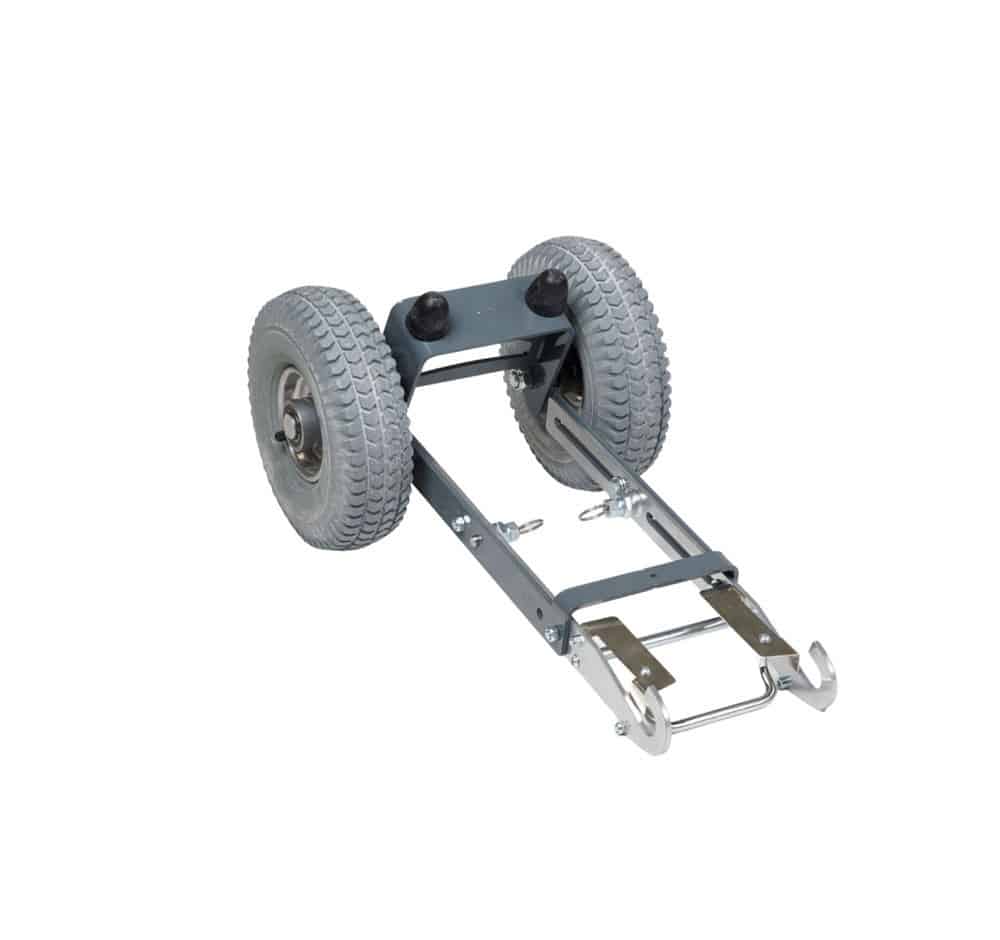
Transport Kit for Walk-Behind Trowels #A151

Lightweight and Durable Transport System for 36″ – 48″ concrete trowel machines (kit weighs only 23lbs). It is a front-mounted wheel kit that slides beneath the machine, offering improved maneuverability. Height can be adjusted to work with 36″-48″ machines.
 
Compatible with SP3, SP4 and other walk-behind trowels on the market.
 
No more back strain lifting and moving. Simple upgrade, big impact.
transport wheel kit for SP8H

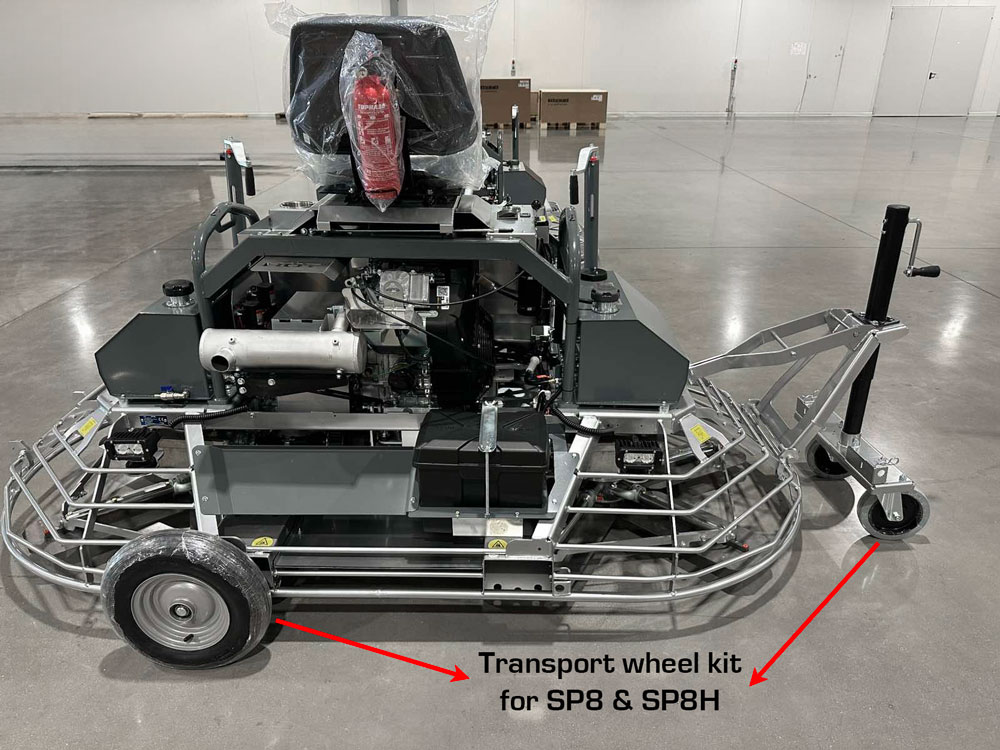
Transport Kit for Ride-On Trowels #A124

Durable Transport System for 8-foot concrete trowel machines.
 
Compatible with SP8, SP8H and other 8-foot trowels.
 
Simple upgrade, big impact.

TROWEL BLADES AND FLOAT PANS

Superabrasive now offers high quality float pans and trowel blades, compatible with Allen, Bartell, Champion, Dart, ESI, Essick, Kelley, MBW, Marshalltown, Morrison, Muller, Oscar, Rhin-O-Tuff , Toro / Stone, Wacker, Whiteman. 

Float pans clip on to the blades of a trowel machine and are used to flatten the slab.

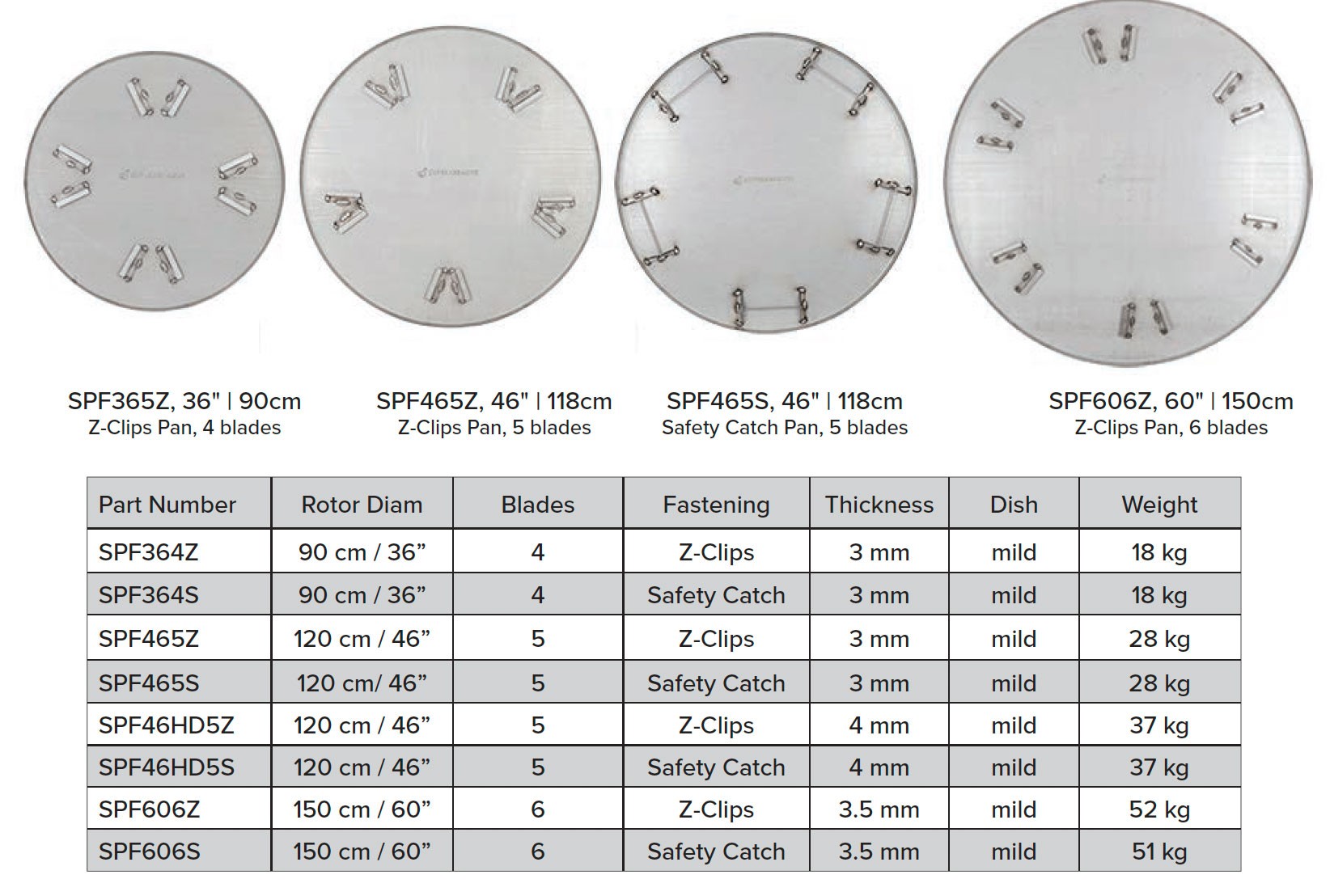
We offer heavy-duty steel float pans in different sizes: 36”, 46”, and 60” (90, 120, 150cm), to fit a variety of power trowels.

Featuring secure blade attachment with Clip-on or Safety Catch, and available in 3mm or 4mm (HD) thickness.
 

float pans for concrete power trowels

Combination blades are a combination of finish and float blades, featuring a floating edge on one side that allows concrete to flow under the blade, and a flat finishing edge for finishing.
Finish blades are flat and have the carrier bar located in the centre of the blade. Unlike combination blades, both sides of the blade can be used, i.e the blade can be rotated 180 degrees providing a new finishing edge. Finish blades are normally used in the final stages of finishing to create a burnt finish.
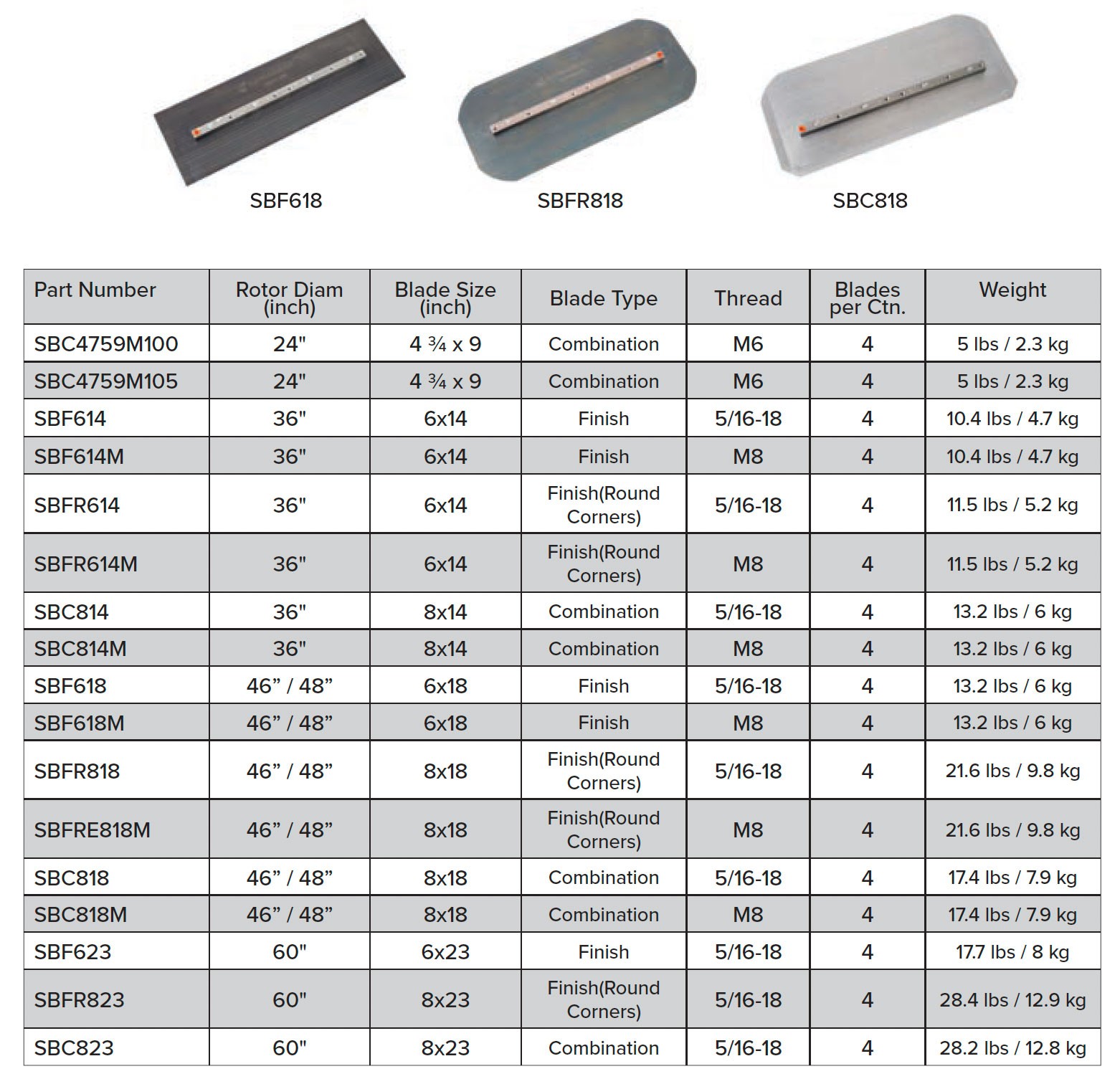

finishing and combo blades for power trowel machines

Concrete Finishing FAQ

Is pan and blade quality important?

Both float pan quality and blade quality matter a lot when finishing concrete with power trowels. Skimping on either usually shows up directly in the floor.

Float pan quality (early finishing stage) – The float pan is what sets the foundation of your finish.

  • Flatness & rigidity: A high-quality pan stays flat under load, helping you achieve better FF/FL numbers. Cheap pans can flex or warp, creating waves.
  • Material thickness: Thicker steel distributes weight evenly and resists deformation, especially on large slabs.
  • Balance: A well-balanced pan reduces machine chatter and operator fatigue.
  • Wear resistance: Better steel lasts longer and maintains consistent performance across jobs.

Blade quality (final finishing stage) – Blades determine the final surface appearance and density.

  • Edge consistency: Precision edges produce a smoother, more uniform finish without streaking.
  • Steel hardness: Higher-grade steel keeps its shape longer and delivers a tighter burnish.
  • Flex characteristics: Good blades flex just enough to follow the slab without digging in.
    Finish quality: Inferior blades can leave swirl marks, lines, or uneven sheen.


How they work together:
Pan = structure + flatness
Blades = smoothness + polish
If either one is low quality, it limits the other.

Why use pans to float concrete?

Float pans are used to remove surface imperfections, improve flatness and to compact concrete before the finishing operations. Unlike blades, floating pans distribute pressure evenly, which is essential in rebar fabrication and large-scale concrete projects.

When to start pan floating?

Correct timing is crucial when using power trowels and floating pans. Floating should never be done when bleed water is present, as this can lead to surface scaling and dusting.

When a finisher walking on the surface leaves only a 1/4-inch indentation, the concrete is ready for floating. Since walking on soft concrete can affect the surface quality, pan floating is most commonly done with riding trowels. However, smaller walk-behind or edging machines up to 36 inches are beneficial for floating edges and slab penetrations.

How to use float pans for best results?


  • Use low speed to prevent damaging the surface
  • Apply a forward-backward technique to minimize turn marks
  • Avoid high-speed, uncontrolled floating, as this reduces flatness
  • Always make the first pass perpendicular to the direction of screeding
  • Work the edges in a backward pass because forward passes can cause the concrete to rise, creating additional edge work.
  • The number of passes is also important –  a minimum of two passes is required, but four passes are preferred, with each pass perpendicular to the previous one.
All search results